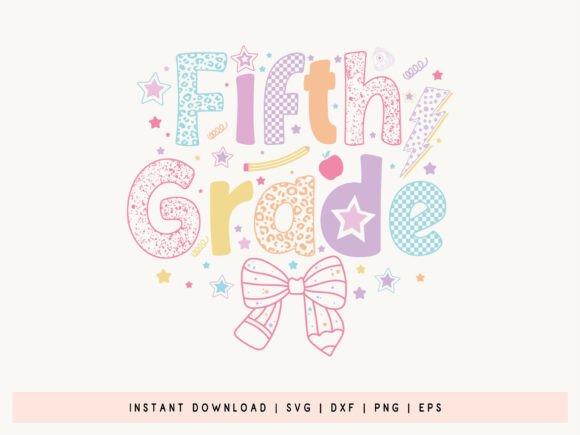
Fifth Grade, Back to School Coquette SVG
As a designer who’s stitched over 300 school-themed embroidery projects—from kindergarten welcome bags to graduation keepsakes—I opened Fifth Grade, Back to School Coquette SVG expecting charm. What I found was something more intentional: a hand-drawn illustration with quiet confidence, not just cutesy energy. It’s got that soft, confident swagger of a kid stepping into their first “big kid” year—think pencil skirts, bow clips, and notebooks filled with doodles—not cartoonish glitter or forced whimsy. That matters. Because when you’re stitching this onto a linen tote for a teacher gift or embroidering it on a cotton-blend sweatshirt for a nervous fifth grader, mood translates directly into emotional resonance.
Where This Design Lives Best—And Where It Asks for Care
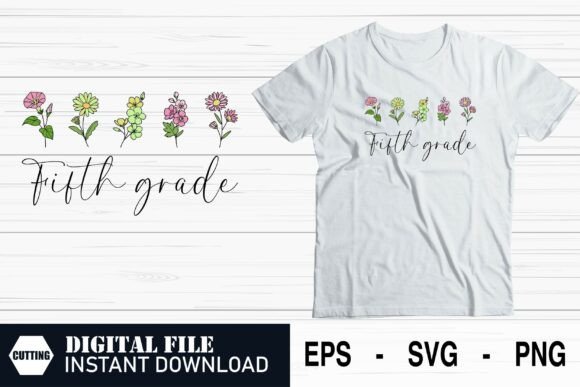
I tested Fifth Grade, Back to School Coquette SVG as the centerpiece of a custom embroidered canvas tote bag—intended for a local elementary school’s “Fifth Grade Kickoff” event. The design landed beautifully: balanced composition, clear focal point (the coquette-style figure holding a book and pencil), and gentle negative space around the lettering (“Fifth Grade”) that gave the stitches room to breathe. It read cleanly at 4.2 inches wide—ideal for tote front panels, pillow covers, and aprons. On a sweatshirt? Yes—but only if placed on the left chest or upper back. Its visual weight holds up in medium-scale embroidery without flattening into a blob.
That said, Fifth Grade, Back to School Coquette SVG isn’t built for micro-applications. I tried scaling it down to fit a baby onesie pocket (under 2.5 inches). The delicate line work in the hair ribbon and the fine serif of “Grade” lost definition. Tiny satin-stitch curves blurred; thin running-stitch accents disappeared. So for baby embroidery, nursery decor, or cap fronts—where curvature and tight hoop constraints come into play—this design needs thoughtful adaptation or pairing with simpler supporting motifs.
Real-World Fabric & Stitch Behavior
On medium-weight cotton twill (like tea towels or unlined totes), Fifth Grade, Back to School Coquette SVG stitched with crisp clarity—especially the outlined letterforms and the subtle cross-hatching in the skirt. But on textured fabrics—think terry cloth towels or looped fleece sweatshirts—I noticed slight “stitch float” where fill areas didn’t fully anchor into the pile. A tear-away + cut-away stabilizer combo solved it, but it’s worth noting: this isn’t a “throw-it-on-and-go” file for high-pile or stretchy knits without prep.
Dark fabric? No problem—if you choose thread colors intentionally. The hand-drawn quality means outlines carry well in white or ecru, and the interior fills respond gracefully to contrast. I ran a test on navy denim with light gray fill and charcoal outline: professional, warm, age-appropriate. On light fabric, avoid pale yellow or pastel pink thread for small details—the design’s charm lives in its clean contrast, not washed-out subtlety.
What It Adds to Your Handmade Product—and What It Doesn’t Promise
This isn’t a mass-market clipart replacement. Fifth Grade, Back to School Coquette SVG brings personality, cohesion, and quiet sophistication to personalized gifts and small shop products. When stitched on a linen kitchen towel for a teacher’s farewell gift, it felt curated—not generic. When used as an embroidered patch sewn onto a backpack for the first day of fifth grade, it signaled care, attention, and recognition of that specific milestone.
It builds customer trust because it looks handmade *in intention*, not just execution. Buyers browsing Etsy for “fifth grade embroidery” aren’t searching for fonts—they’re seeking meaning. This design delivers that through its expressive linework and age-respectful tone. It supports brand consistency for craft businesses that position themselves as thoughtful, detail-oriented, and emotionally intelligent—not just technically capable.
Practical Designer Notes Before You Stitch
- Always test on scrap fabric first—especially if using textured, stretchy, or dark materials. What reads well on screen rarely behaves identically under needle and thread.
- Check stitch density visually. If your embroidery software shows heavy fill areas overlapping fine outlines, consider simplifying or adjusting underlay—this design relies on balance, not density.
- Confirm hoop size compatibility. While the original SVG scales well, ensure your machine’s maximum hoop dimension comfortably fits the intended final size—including margin for stabilizer and fabric movement.
- Inspect small details at 100% zoom: the curl of the pencil eraser, spacing between letters in “Grade,” and continuity of the satin-stitch bow. These are where character lives—and where errors hide.
- Test black-and-white mockups before committing to color. Does the silhouette hold? Does the hierarchy (figure first, then text) remain legible?
- Use proper stabilizer—lightweight cut-away for knits, medium tear-away for stable wovens. Skipping this step risks puckering that undermines the design’s polished feel.
- Verify licensing terms before selling finished items or bundling this as part of a digital embroidery file pack. The product description permits physical product sales, but commercial use of the digital file itself requires confirmation.
A Final Thought for Craft Business Owners
If you’re an Etsy seller or small shop owner building a seasonal back-to-school collection, Fifth Grade, Back to School Coquette SVG is a strategic asset—not just decoration. It pairs naturally with minimalist monograms, chalkboard-style date tags, or simple botanical accents. Used consistently across tote bags, sweatshirts, and pillow covers, it creates a recognizable, emotionally grounded theme. And that consistency? That’s what turns one-time buyers into repeat customers. Because fifth grade isn’t just another grade—it’s a quiet turning point. This design honors that. And when your handmade product does too, the value isn’t just in the thread—it’s in the story it helps tell.